
Demographic change and an aging population are causing a growing shortage of skilled workers across Europe, particularly in the healthcare sector. At the same time, demand for medical care is increasing, placing mounting pressure on hospitals. This is especially apparent in dynamic areas such as surgical planning, where various professional groups and resources must be coordinated. These processes are difficult to predict, tightly interwoven, and often subject to last-minute changes. In many hospitals, duty rosters are still created manually - a process that is both time-consuming and error-prone. Often, medical staff are responsible for this task, adding to their already high workload. Existing scheduling systems tend to rely on rigid shift models and largely ignore the individual preferences of employees. The result can be overwork, reduced quality of care, and low team morale. To secure a sustainable workforce, hospitals must place greater emphasis on employee well-being and make more efficient use of their available resources. Modern personnel planning should not only comply with legal and organizational requirements but also adapt flexibly and fairly to the needs of employees.
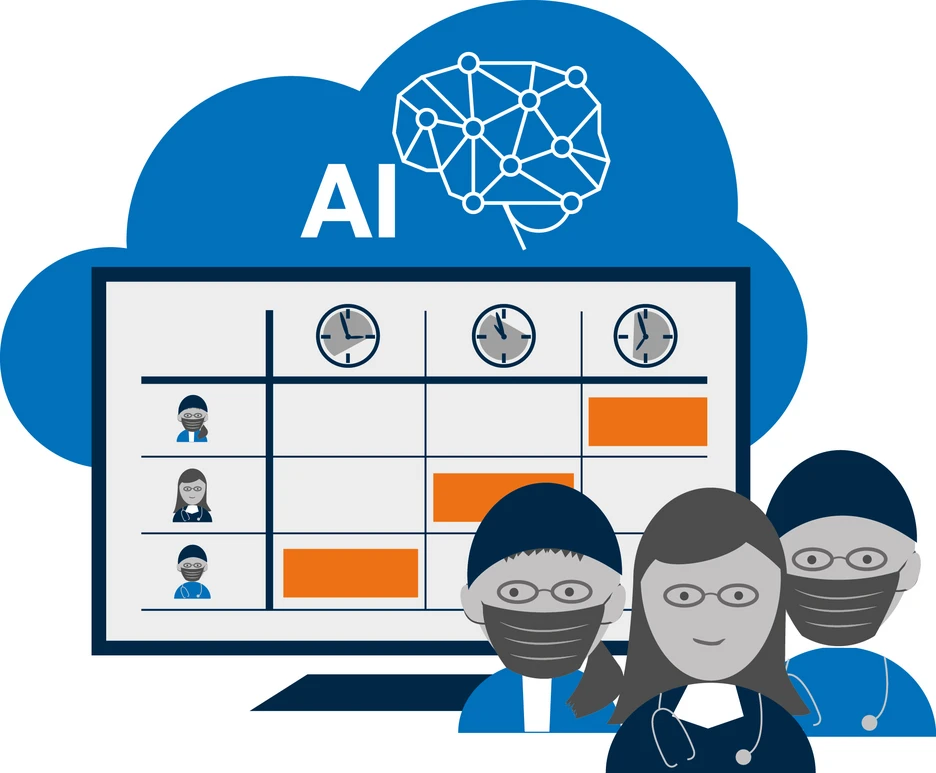
The FAIRPLAN project aims to develop an AI-based planning system for fair and efficient hospital staff scheduling. By taking individual employee preferences into account and intelligently allocating available resources, the aim is to increase staff satisfaction and mitigate the existing shortage of skilled workers in a targeted manner. FAIRPLAN pursues a multidimensional, data-centered approach and uses explainable artificial intelligence (XAI) to make planning decisions comprehensible and transparent for hospital staff. In close cooperation with Klinikum rechts der Isar, a software-supported demonstrator is being developed that not only complies with data protection regulations but also actively contributes to the acceptance of AI applications in the healthcare sector.
The FAIRPLAN project is developing a software-based demonstrator for AI-supported personnel planning in the hospital environment. In close cooperation with Klinikum rechts der Isar, a systematic analysis of existing planning processes and challenges, particularly in the area of surgery and shift planning, is first carried out. Based on this, a multidimensional planning algorithm is designed that not only considers legal requirements and shift models but also integrates individual employee preferences. A central element is integrating explainable AI methods (XAI) to make planning decisions transparent and comprehensible. Data protection compliance and a user-centered software design are at the forefront. The solution is being tested as a prototype in everyday clinical practice and iteratively developed in close cooperation with medical staff to ensure high practical suitability and acceptance.